How to Become a Proofreader Online in 2026 (Realistic Guide)
What proofreading actually pays in 2026, the platforms that hire beginners, the skills that separate $15/hour proofreaders from $50/hour ones, and the honest 6-month path.
Disclosure: Some links below are affiliate links — if you click and buy, we may earn a small commission at no extra cost to you. We only recommend tools we've actually used. Read our full disclosure.
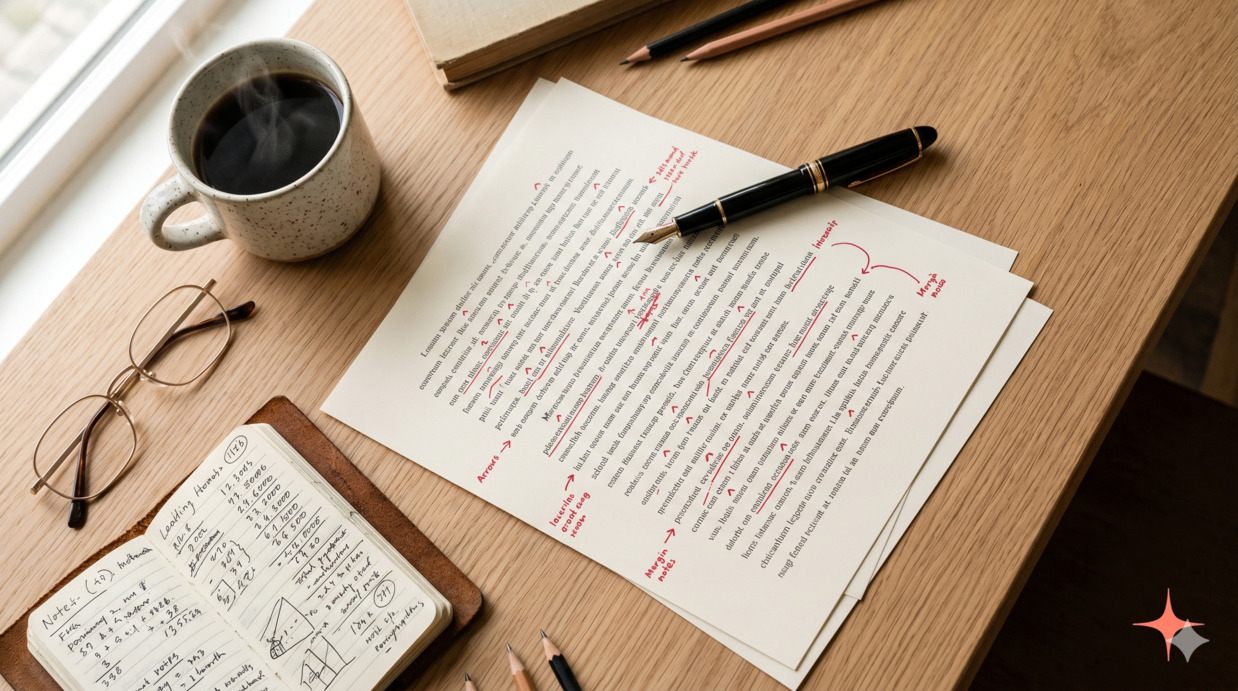
If you've researched becoming a proofreader, you've probably seen the phrase "proofread Anywhere" or one of the major proofreading courses sold by people whose actual income comes from selling the course rather than from proofreading. The market for "how to become a proofreader" content is crowded by people with strong incentives to make the path look easier and faster than it is.
This article is the version we wish we'd had. M.A. (who edits everything on the archive and ran a small editorial business in 2018-2021) has worked with enough proofreaders directly and tracked the market closely enough to give you the actual picture in 2026. The path works. It's slower than the courses sell. The specialist niches are where the real money is.
For the broader online-jobs landscape, see 17 online jobs that pay. For the related path of becoming a freelance writer, the virtual assistant article covers the adjacent specialty work. This article is the proofreading-specific deep dive.
What proofreading actually is (and isn't) in 2026
Worth being precise here because the terms get used loosely. In editorial work, there's a hierarchy:
- Developmental editing — high-level structural feedback on a manuscript. Highest skill, highest rates ($60-150/hour).
- Line editing / copyediting — sentence-level polishing for clarity, tone, and consistency. Mid-tier ($30-80/hour).
- Proofreading — final pass for typos, punctuation errors, formatting issues, and consistency with style guides. Entry tier ($20-50/hour).
The lines between copyediting and proofreading have always been blurry. Many "proofreading" jobs in 2026 are actually light copyediting work, and most experienced proofreaders blur the line up by adding light copyedit fixes when they spot them. That's good for income.
What's changed in 2024-2026: AI tools (Grammarly Pro, ProWritingAid, and increasingly LLM-based tools) handle the simplest level of proofreading work — basic typos and grammar — at near-zero cost. This compressed the bottom of the market. Generalist proofreading on simple content (blog posts, basic business writing) has dropped 30-50% in rates.
The specialist niches haven't been compressed nearly as much, because the work involves judgement, domain knowledge, or formatting requirements that AI doesn't handle well. The path that works in 2026 is moving toward those niches, not staying generalist.
The realistic income trajectory
| Stage | Timeline | Hourly rate | Monthly income (15 hrs/week) |
|---|---|---|---|
| Skill-building + portfolio | Months 1-3 | $0 (training) | $0-300 |
| Generalist via platforms | Months 3-9 | $15-25 | $900-1,500 |
| Specialist (one niche) | Months 9-18 | $30-45 | $1,800-2,700 |
| Established specialist | Year 2+ | $40-65 | $2,400-3,900 |
| Senior specialist (with referral pipeline) | Year 3+ | $50-100 | $3,000-6,000 |
The middle column is hourly rate. Right column is monthly income at 15 hours of paid client work per week.
The single biggest mistake new proofreaders make: trying to skip the platform-testing stage and go straight to direct client outreach. Platforms (Scribendi, Reedsy, etc.) take a meaningful cut of the rate, but they screen for clients and provide a steady volume that's hard to replicate with cold outreach in months 1-9. Direct outreach becomes meaningful in year 2+, after you have a portfolio and reputation.
The five specialist niches that pay
These are the niches where rates have held up through the AI compression. Each one has a defensible reason it can't be commoditised by general-purpose AI.
1. Academic proofreading (theses, dissertations, journal articles)
Academic clients (PhD students, postdocs, researchers, professors) pay premium rates because the cost of an error in a thesis or journal submission is high. The work involves familiarity with academic style guides (APA, MLA, Chicago, plus discipline-specific norms), referencing systems, and the conventions of academic writing.
Rates: $30-60/hour for proofreading; up to $80-100/hour for proofreading + light copyedit on PhD theses.
The skill stack: thorough familiarity with at least one major style guide, ability to verify references and citations, judgement about academic conventions in your specific discipline. ESL proofreading (non-native English academic writers) overlaps heavily with this niche.
The platforms: Scribendi has academic queues, Cambridge Proofreading and Editing Services hires for this niche, and direct outreach to university departments works once you have a portfolio. Some PhD students hire proofreaders directly; that work tends to be the highest-rate.
2. Legal transcript proofreading
Court reporters create transcripts that need a final proofreading pass before delivery to attorneys. This is its own ecosystem with its own training and certification requirements (notably, the National Court Reporters Association's Realtime Reporter and proofreading certifications).
Rates: $0.30-0.55 per page (which works out to $30-55/hour for experienced proofreaders working at typical pace). Some specialists charge per minute of audio rather than per page.
The skill stack: legal terminology and citation formats, court-reporting transcript conventions, attention to verbatim accuracy. Most successful legal transcript proofreaders complete a specific training program (Proofread Anywhere has a legal-specific course; CourtReporterEdu lists alternatives). This is one of the few niches where paying for specific training is genuinely defensible.
The platforms: Proofread Anywhere graduates often work directly with court reporters they meet through the program's network. NCRA's career resources also list opportunities.
3. Fiction proofreading for indie authors
The self-publishing market produced steady demand for fiction proofreaders through 2024-2026. Indie authors typically can't afford traditional publisher-rate editors but can afford $200-800 for a proofreading pass before publication.
Rates: $20-40/hour for early proofreaders; $40-80/hour for those with a portfolio and genre specialisation.
The skill stack: thorough familiarity with fiction conventions (dialogue formatting, scene breaks, perspective shifts), ability to maintain voice rather than over-edit, comfort with longer formats (60,000-100,000 word manuscripts). Genre specialisation matters — proofreaders known specifically for romance, thriller, or fantasy fiction earn more than generalists.
The platforms: Reedsy is the dominant marketplace for indie author work. Fiverr and Upwork also work but require building from zero reviews. Direct relationships with indie authors compound — many fiction proofreaders work with the same 5-15 authors repeatedly across multiple books.
4. ESL proofreading
Proofreading work for non-native English authors — academic, professional, or fiction. The work involves a different skill set than standard proofreading: identifying patterns common to specific language backgrounds (Spanish-speakers vs Mandarin-speakers vs Arabic-speakers all make characteristic English-language errors), and balancing fidelity to the author's voice with English-language norms.
Rates: $35-70/hour at experienced level. Higher for academic and technical work.
The skill stack: deep familiarity with English usage, awareness of common L2 (second-language) error patterns, judgement about what to "fix" versus what to preserve as author voice. Some experience with one or two non-English languages helps but isn't required.
The platforms: Cambridge Proofreading hires for ESL specifically. Direct outreach to international student communities at universities works. Wordvice and similar specialty agencies focus on this niche.
5. Podcast/video transcript proofreading
A relatively new niche that emerged with the growth of podcasts and YouTube. Auto-generated transcripts (from Otter, Descript, Rev) need human proofreading for accuracy, formatting, and readability.
Rates: $0.50-1.50 per audio minute, which works out to $25-60/hour for experienced workers.
The skill stack: comfort with verbatim vs clean-read transcription decisions, familiarity with audio-content conventions (timestamps, speaker labels), ability to work efficiently in transcription tools. Lower technical bar than the other niches but high attention bar.
The platforms: Rev has a proofreading tier (lower-paid). Specialty agencies like GoTranscript and Crowdsurf hire transcript proofreaders. Direct outreach to podcast networks and creator agencies works for the higher-rate end.
The honest 6-month plan
For a beginner with no prior editorial experience but strong English-language skills, here's the plan that produces the most consistent results.
Months 1-2: Skill calibration and portfolio building
- Pick your specialty niche from the five above. Resist the generic "I'll proofread anything" path.
- Free skill development: each niche has 8-15 hours of free resources that cover most of what you need to start. Read carefully — the tests at platforms (covered below) are demanding.
- Build a small portfolio: proofread 3-5 sample pieces in your niche. For fiction, find an indie author online and offer a free 5-page proofreading pass for their next manuscript in exchange for a testimonial. For academic, find a PhD student via university Twitter or LinkedIn and offer the same. The unpaid pilot work is the price of entry.
- Set up basic infrastructure: a clean LinkedIn profile, a one-page portfolio site (Carrd or similar) with your niche stated clearly and 2-3 sample edits visible, and a professional email.
Months 2-3: Platform testing
This is the rigorous part of the path that course sellers compress. The major proofreading platforms have legitimate tests, and most beginners fail them on the first attempt. Plan for it.
- Scribendi has a thorough test (3-4 hours of timed editing exercises). Pass rate for first-time test-takers is roughly 25-35%. Their training materials are accessible before you take the test; use them.
- Proofreading Pal has a similar process with comparable difficulty.
- Reedsy doesn't have a single test but vets proofreaders through portfolio review and trial assignments. Quality bar is high.
The right framing: failing the first test isn't a sign you can't do this work — it's a sign that the platforms maintain quality. Many proofreaders pass on the second attempt after additional preparation. If you fail twice, that's signal worth heeding.
Months 3-6: First paid work and rate development
- Once you've passed at least one platform test, you'll start getting work. Initial rates are at the platform's standard ($15-25/hour for most major platforms). This is normal and acceptable for the first 60-90 days.
- Use platform work as your "stable income" while building direct client relationships:
- Maintain a clean profile (LinkedIn, portfolio site)
- Continue building portfolio pieces in your niche
- Start reaching out to potential direct clients (indie authors via Reedsy/Twitter for fiction; PhD students/labs for academic; podcast creators for transcript work)
- By month 6, aim for 60-70% of your hours coming from platform work, 30-40% from direct clients at higher rates.
Months 6-9: Rate increases and direct client growth
- With 30-40 hours of completed work and at least 5-8 testimonials, raise your rates with new direct clients. The platform rates stay where they are (you don't negotiate with platforms easily).
- Develop a "rate card" — your standard rates by project type. Common pattern: $0.012-0.018 per word for proofreading, $0.018-0.025 per word for proofreading + light copyedit, project-based pricing for full manuscripts.
- By month 9, the goal is to have direct client work covering at least half your hours, at rates 30-50% above your platform rates.
The honest framing: at month 9, you're at the start of a real proofreading practice. Income is likely $1,500-2,500/month if you've followed the plan consistently. Year 2 is where the math improves meaningfully.
Tools that pay for themselves
Most proofreading work happens in Microsoft Word with Track Changes, regardless of niche. Beyond that, the following tools provide enough value to justify their cost.
Grammarly Premium ($30/month) — useful as a second-pass tool, not as your primary work. Catches things you'd otherwise miss; misses things you'd otherwise catch. Worth it for the time savings.
PerfectIt ($70/year) — consistency-checking software that catches formatting and style inconsistencies (US vs UK spelling, capitalisation patterns, hyphenation). High-leverage for academic and book-length proofreading specifically.
ProWritingAid ($120/year) — alternative to Grammarly Premium with a heavier emphasis on stylistic suggestions. Some proofreaders prefer one or the other; rarely both.
A good ergonomic setup — separate keyboard and monitor at minimum, ideally a standing-or-sitting desk option. Proofreading is sustained close-attention work; ergonomic problems compound quickly.
You don't need a paid course to start. You don't need a "proofreading certification." Any course or program that's selling you on "becoming a proofreader" rather than on a specific advanced skill in a specific niche is almost certainly worse value than the equivalent time spent on platform tests and unpaid sample projects.
What this means for the long term
Proofreading has compounding effects that take 18-24 months to fully show up. By year 2-3, the experienced proofreader has:
- A roster of 8-15 repeat direct clients providing 60-80% of income
- A portfolio of testimonials enabling premium rates ($50-80/hour for specialists)
- Specialty knowledge that compounds — your 50th academic thesis is much faster than your 5th
- Optional paths to higher-tier work: developmental editing, technical editing, book editing for traditional publishers
The right framing: proofreading is a skilled trade with a 1-2 year apprenticeship period. Most quitters quit during the apprenticeship. Most who finish the apprenticeship find the rest of the path more sustainable than they expected.
For the broader online-jobs landscape, 17 online jobs that pay covers the alternatives. For the related VA path, our How to become a virtual assistant article covers a parallel skilled-service path with similar structure. For the audience-specific framing, For Complete Beginners reading path is the broader sequence.
Frequently asked questions
FAQFrequently asked
Do I need a college degree to become a proofreader?
How long until I can quit my day job?
Is proofreading still viable now that AI exists?
What's the difference between proofreading and copyediting?
Should I pay for Proofread Anywhere or similar courses?
How fast can I read while still catching errors?
What's the most common reason new proofreaders fail?
Can I proofread in genres I don't read?
What to do next
If proofreading is the path you're choosing, the first decision is which niche. Don't default to generalist; the five niches above are where rates and demand have held up. Pick based on the three-filter framework (subject-matter affinity, documented rates, accessible portfolio path).
The 6-month plan above is the execution layer. Months 1-2 for skill calibration and portfolio, months 2-3 for platform testing, months 3-6 for first paid work and rate development.
For the broader online-jobs landscape, 17 online jobs that pay covers the alternatives. For the parallel VA path, our virtual assistant article covers a similar skilled-service progression. For the broader sequence on first online income, our For Complete Beginners reading path is the broader sequence.
Drop your email below to get our Proofreader Starter Toolkit — the 5-niche decision matrix, the platform-test prep checklist, the rate-card template, and the LinkedIn outreach scripts we've watched work. Free.
How this article was made
Written by The Hustle Archive Team. Tested by M.A.. Fact-checked by S.K.. Originally published May 4, 2026, last updated May 4, 2026. Read our editorial policy and the methodology behind our rankings.
Sources
Found an error? Tell us— we update articles within a week.
Free download
Proofreader Starter Toolkit
5 specialty niches that AI didn't compress, plus the platform-test prep checklist.
Read next
More from the archive
Side Hustles · 18 min
How to Become a Freelance Writer With No Experience in 2026
The honest path from zero to first paying freelance writing client. Realistic income trajectory, the niches that pay, the platforms that hire beginners, and the 6-month plan.
Read more
Side Hustles · 19 min
How to Become a Virtual Assistant in 2026: The Honest Step-by-Step
What it actually takes to become a virtual assistant in 2026: the realistic income path, the skills that pay, the platforms that hire beginners, and the timeline to your first paying client.
Read more
Side Hustles · 19 min
Side Hustles for Retirees in 2026: 17 Methods That Actually Fit a Slower Life
What actually works as a retirement side hustle in 2026: methods sorted by tech comfort, time commitment, and whether they pause cleanly when life happens. Honest income ranges, realistic timelines, and the categories we'd specifically avoid.
Read more


